A good handoff is not what happens after the AI fails. It is one of the journeys the product should be designed to complete well.
That becomes even more important when a Brandbot supports employees, students or customers in moments carrying frustration, uncertainty or emotional weight.
Know the boundary
Helpful starts with being honest about the role.
Before we design dialogue, we define what the Brandbot may answer, what it should never infer and which signals should open a route to a person. Those boundaries need to be visible in the experience—not hidden in a policy page.
The best escalation feels like one continuous act of support.
Carry the context
Nobody should have to begin the difficult part twice.
When consent and the surrounding systems allow it, a handoff should preserve the useful context: what the person is trying to do, where the journey stopped and which approved steps have already been tried.
The human should receive a clear starting point. The user should understand who takes over and what will happen next.
Keep the character honest
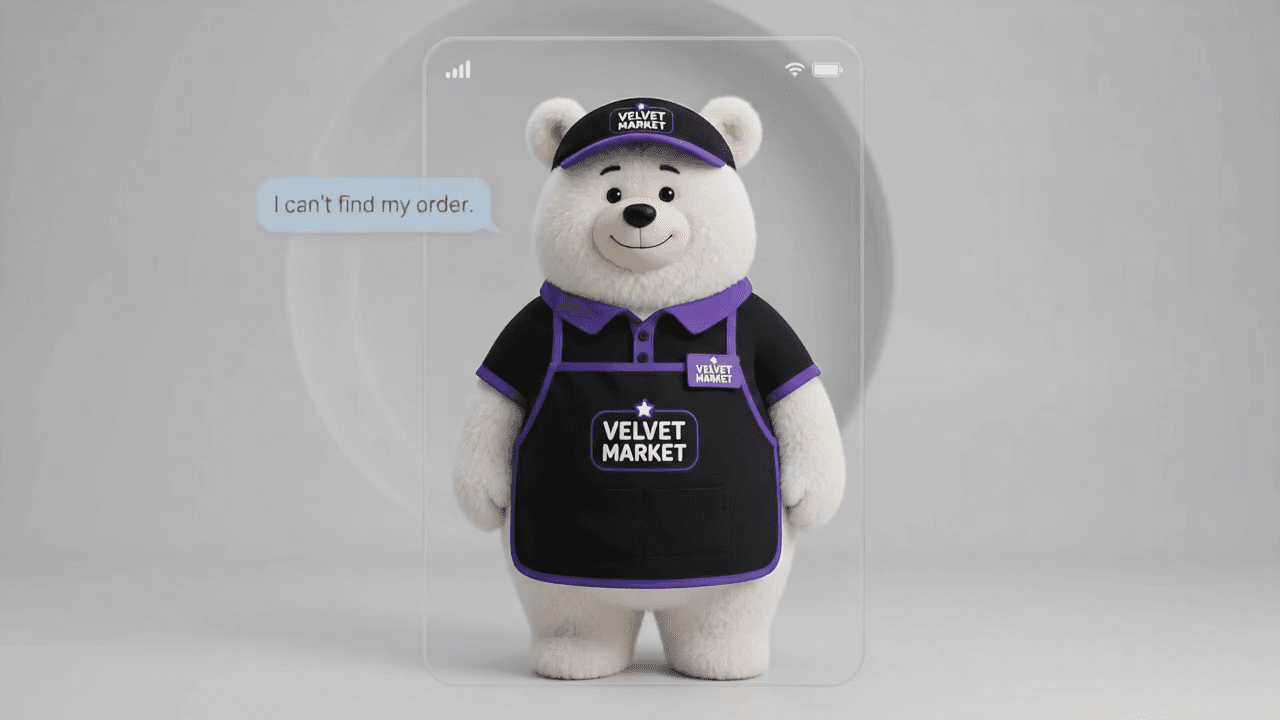
Warmth works best when it does not blur responsibility.
An expressive character can acknowledge frustration and make instructions easier to follow. It should not create false certainty or imply professional expertise it does not have. Emotional intelligence is as much about restraint as expression.